

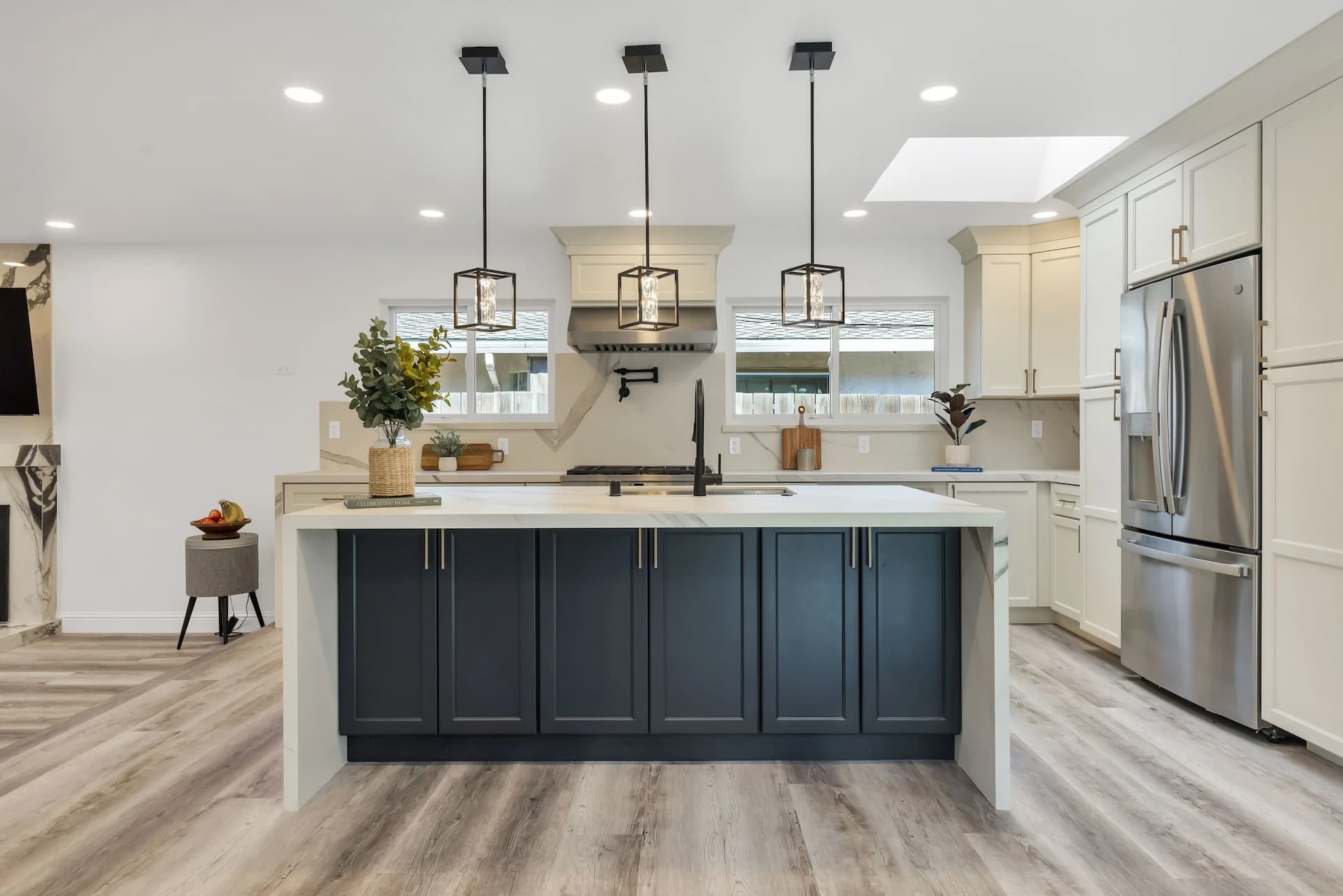
Choosing the right remodeler can make the difference between a renovation that feels organized and rewarding and one that becomes stressful, expensive, and unpredictable. If you are planning a kitchen remodel, bathroom renovation, whole-home remodel, room addition, or ADU in San Jose, use the following criteria to compare contractors with confidence.
1. Verify the contractor’s license, bond, and insurance
Start with the basics. A professional remodeling contractor in San Jose should be able to provide a California contractor license number, proof of bonding, and current insurance information. Confirm that the license is active and that the business name matches the company presenting the proposal. Golden State Designs, for example, holds California contractor license #1055272 and is licensed, bonded, and insured.
Ask about general liability insurance and workers’ compensation coverage for the people who will be on your property. These protections matter on every renovation, whether you are moving a kitchen wall, rebuilding a bathroom, or adding living space. Avoid relying on a verbal assurance; reputable San Jose general contractors are prepared to document their credentials.
2. Look for relevant local remodeling experience
Remodeling is different from new construction. Existing homes can reveal uneven framing, aging electrical systems, plumbing conditions, previous unpermitted work, or structural details that are not visible during an initial walkthrough. An experienced home remodeler knows how to investigate those conditions, build a reasonable contingency into the plan, and communicate quickly when something unexpected appears.
Local experience also matters. A San Jose remodeling contractor should understand the area’s housing stock, design expectations, and permitting process. Ask to see projects similar to yours in scope—not only attractive finished photos. If you are planning an ADU, second-story addition, or structural renovation, confirm that the team has completed projects with comparable design, engineering, and inspection requirements.
3. Compare the scope of work—not only the price
A low bid can be appealing, but the number is only useful when you know what it includes. Two proposals that appear to cover the same kitchen remodel may have very different assumptions about demolition, cabinetry, electrical upgrades, flooring, finish materials, debris removal, permits, project management, and final cleanup.
A thorough remodeling proposal should explain:
- What work is included and specifically excluded
- Which materials or finish levels are assumed
- Whether fixtures and finishes are fixed selections or allowances
- Who is responsible for plans, engineering, permits, and inspections
- How payments connect to meaningful project milestones
- How unforeseen conditions and client-requested changes are documented
When comparing San Jose remodelers, ask each company to clarify gaps in writing. A complete scope helps you make an apples-to-apples decision and reduces the likelihood of surprise costs after construction begins.
4. Ask who owns the design-build process
Home remodeling involves more than construction labor. Depending on the project, it may require design development, drawings, structural engineering, finish selections, permit submittals, scheduling, procurement, trade coordination, and inspections. If those responsibilities are fragmented, homeowners can get stuck carrying information between several parties.
A design-build contractor provides a more coordinated path by keeping design and construction aligned from early planning through completion. Whether you choose a design-build firm or separate professionals, ask who is accountable for each stage, who is your day-to-day contact, and how decisions move from the drawings into the field.
5. Confirm the permit and inspection plan
Many remodeling projects require permits, especially when work affects structure, electrical, plumbing, mechanical systems, additions, or changes of use. Your agreement should identify who prepares the documents, submits to the City of San Jose or other local authority, responds to plan-check comments, schedules inspections, and closes the permit.
Be cautious if a contractor suggests skipping required permits simply to save time or money. Properly permitted work supports safety, creates an official record of the improvement, and can matter when you refinance or sell the home. A knowledgeable remodeler should be willing to discuss permit responsibility before the contract is signed.
6. Review references with better questions
Recent references can tell you more than an online rating alone. Ask for clients whose renovations are similar in size or complexity, then ask specific questions: Did the team communicate consistently? Was the home kept reasonably clean and secure? Were changes documented before work proceeded? How did the contractor respond when an unexpected condition appeared? Would the homeowner hire the same company again?
Also review independent sources and completed project galleries. Look for consistency across full home remodels, kitchen remodeling, bathroom remodeling, additions, and ADU construction—not just one carefully photographed room. Strong craftsmanship should show in layout, alignment, transitions, finish details, and how new work connects with the existing home.
7. Evaluate communication before construction starts
The estimating stage is a preview of the working relationship. Notice whether the contractor arrives prepared, asks thoughtful questions, explains tradeoffs in plain language, and follows through on promised information. Good communication does not mean having an instant answer to every question; it means being clear about what is known, what must be investigated, and when you will receive the next update.
Ask how often you will receive progress updates, how selections and approvals are tracked, and who has authority to answer questions on site. For an occupied home remodel, discuss working hours, access, dust control, protection of existing finishes, pets, temporary utilities, and daily cleanup before the work begins.
8. Understand scheduling, allowances, and change orders
A responsible contractor should explain the expected sequence and major dependencies without promising a timeline that ignores plan review, material lead times, inspections, or unforeseen conditions. Ask when long-lead items will be selected and ordered, what could affect the start date, and how schedule changes will be communicated.
Allowances should be realistic for the quality level you expect. If a proposal carries an unusually low allowance for tile, appliances, plumbing fixtures, or cabinetry, the contract price may rise quickly when real selections are made. Every change order should describe the added or removed work, cost, and potential schedule effect before the changed work proceeds whenever practical.
9. Look for a contractor who protects the finished result
Ask what happens near completion. A professional remodeling company should have a process for final walkthroughs, punch-list items, permit closeout when applicable, product information, and warranty requests. Clarify what workmanship warranty is included and who you contact after the last payment.
The best remodeler is not necessarily the fastest or the least expensive. It is the team that understands your goals, presents a realistic plan, protects your home, coordinates the details, and stands behind the craftsmanship.
A Local Design-Build Partner
Planning a home remodel in San Jose?
Golden State Designs brings more than 30 years of construction experience to full home renovations, kitchen and bathroom remodels, ADUs, room additions, and second-floor additions throughout San Jose and Santa Clara County. Our design-build approach keeps planning, communication, and construction working toward the same result.
Request a ConsultationFrequently Asked Questions
Hiring a San Jose remodeling contractor
How do I choose a remodeling contractor in San Jose?
Verify the contractor’s active license and insurance, compare detailed written scopes rather than price alone, review relevant local projects, call recent references, and confirm who will manage permits, scheduling, communication, and change orders.
Should a San Jose remodeler handle permits?
For permitted work, the agreement should clearly identify who prepares plans, submits to the City of San Jose or other local authority, responds to corrections, schedules inspections, and closes the permit.
What should a remodeling estimate include?
A useful proposal identifies the project scope, included and excluded work, material assumptions or allowances, payment schedule, approximate timeline, permit responsibility, warranty terms, and a written process for change orders.